
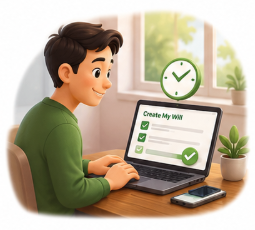
Your Will - to be made by you
Create a legally prepared Will online in as little as 10 minutes. Safeguard your loved ones, clearly express your wishes, and enjoy peace of mind—guided by Malaysia's trusted estate planning experts.
At a glance
Plan clearly for the people and assets that matter most.
A well-prepared will helps you name beneficiaries, appoint an executor, protect minor children, and leave clearer instructions for the family members who depend on you.
Important decisions should not be left to the law by default.
Your will gives instructions for what happens after you are gone. If there is no will, distribution follows the law rather than the personal wishes of you and your family.
- Your assets go to the people you choose, in the proportions you want.
- Your loved ones are protected, especially dependents and minor children.
- Your intentions are clearer, which can reduce delays and disputes.
A smarter way to create your will.
This self-service digital platform lets users create a formatted will anytime, anywhere, without the friction of traditional legal processes. Busy schedules, remote locations, and basic uncertainty no longer need to delay estate planning.
Benefits
Why Will Machine?
Convenient and efficient
You can make your Will through Will Machine anytime and anywhere.

Secure and private
Will Machine only store your personal information. The contents of your Will are never stored by Will Machine, ensuring your privacy and confidentiality.
Legally compliant
Created in accordance with Malaysian legal requirements, giving you confidence that your Will meets the necessary legal formalities.

Affordable Pricing
Create a legally compliant Will at a fraction of traditional legal fees, giving you professional quality and exceptional value for money.
User-friendly flow
A clear and intuitive workflow helps you complete your Will quickly, with helpful guidance at every stage.
Updates and support
Need help along the way? Our support team is here to assist you, and you'll receive updates whenever your Will needs reviewing or refreshing.
Process
Create your will in three simple steps
Start with your details, choose the people and instructions that matter, then review everything before completing the document.
Fill in your personal and asset details
Start with identity, ownership, and the assets you want the will to address, from bank accounts to property and business interests.
Select beneficiaries and instructions
Choose who benefits, who executes the will, and whether guardians, trustees, or testamentary trust arrangements are needed.
Review, pay, and download
Finish the journey with a clear review stage so users understand what will be signed, witnessed, and stored for future access.
What goes inside
Key parts of a will, translated into plain language
Understanding these roles makes it easier to write clear instructions and avoid uncertainty later.
Testator
The person making the will and setting out how assets should be distributed.
Executor
The person appointed to carry out the will, manage the estate, and handle distribution.
Beneficiary
The person or entity entitled to receive assets or benefits from the estate.
Guardian
The person named to care for minor children if parents pass away.
Trustee and trust
The party that manages assets held on trust for beneficiaries according to defined terms.
Witnesses
Individuals who observe signing and confirm the will was executed properly and voluntarily.
Who are you planning for?
This section turns the emotional side of estate planning into a quick visual checklist so users immediately see the people and causes their will can support.
- Spouse or partner
- Children and minor children
- Parents and grandparents
- Siblings and relatives
- Nephews and nieces
- Charity or NGO
Create or update your will when life changes.
Recommended triggers
- As soon as you have someone who depends on you.
- Review every 3 to 5 years, even if nothing major changes.
- Update after marriage, children, new assets, or family changes.
Assets, ownership, and instructions all in one place
Start with the practical details: what you own, how it is held, and who should benefit from it.
- Bank accounts
- Property
- Motor vehicles
- Insurance and EPF
- Investments and shares
- Jewelry and valuables
- Business interests
- Crypto and loyalty assets
Additional prompts
- Record whether assets are solely owned or jointly owned.
- List beneficiaries clearly and note debt cancellation wishes.
- Consider testamentary trust structures for minors or aging parents.
Knowledge
How a will becomes valid?
A will is only useful if it is properly prepared and signed. These checks help explain the core requirements before execution.
Core validity checks
- You are at least 18 years old in Malaysia.
- You are of sound mind and acting voluntarily.
- The will is in writing.
- You sign the will yourself.
- At least two witnesses are present and also sign it.
When execution happens
The will takes effect after death, when the executor applies for a Grant of Probate, gathers assets, settles debts, and distributes the remaining estate according to the will.
Why planning ahead helps
- Clear beneficiary instructions reduce confusion for family members.
- Trust structures can help protect minor children or aging parents.
FAQ
Frequently asked questions
These are the questions most people ask when they begin planning a will for the first time.
What happens if I die without leaving a will?
Your estate may be distributed according to intestacy law rather than your personal wishes, which can create confusion, delays, and outcomes you did not intend.
What is a trust and do I need one?
A trust allows assets to be managed for beneficiaries according to conditions you set. It can be especially useful for minor children, dependents, or parents who need ongoing protection.
When should I update my will?
Review it every 3 to 5 years and sooner after major life changes such as marriage, children, new assets, relocation, or changes in family relationships.
When is my will considered valid?
It must meet local legal requirements including age, mental capacity, written form, voluntary signing, and witnessing by at least two people.
Can I decide how assets benefit my family over time?
Yes. The documents mention using testamentary trust arrangements to manage distribution in ways that better protect minor children or aging parents.
Start your will today. It only takes minutes.
Protect the people who depend on you, organise your wishes clearly, and review your will whenever life changes.